Knee pain and hip pain often appear together. You may notice pain in your knee first, then start feeling soreness around your hip, thigh, or buttock. This can make it difficult to know which joint is actually causing the problem.
So, can knee pain cause hip pain?
Yes, knee pain can contribute to hip pain in some cases. The connection often involves changes in how you walk, stand, exercise, or put weight on your leg. When knee pain changes your movement, the muscles and joints higher up the leg may have to work differently. Over time, this can contribute to discomfort around the hip.
However, hip pain can also cause pain that feels like it is coming from the knee. Hip conditions, including arthritis, can produce referred pain in the thigh and knee. This is why identifying the actual source of your symptoms matters.
This guide explains the connection between knee and hip pain, common causes, symptoms to watch for, treatment options, and when you should seek professional care.
How Are the Knee and Hip Connected?
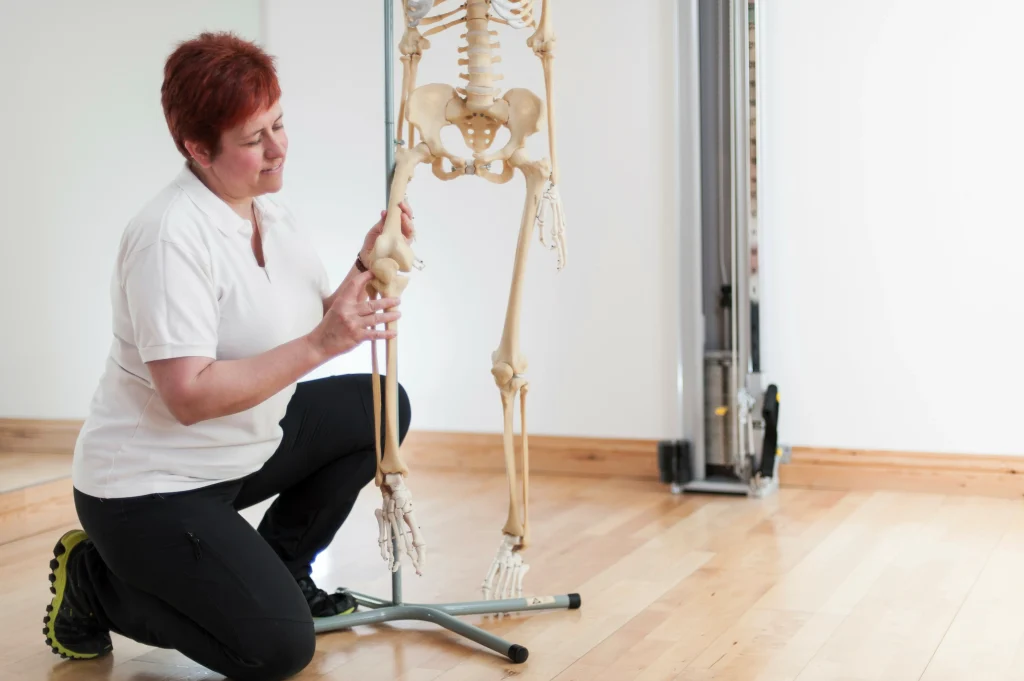
Your knee and hip are separate joints, but they work together during almost every movement of your lower body.
Your hip connects your thigh bone to your pelvis. Your knee connects your thigh bone to your lower leg. Both joints help you walk, climb stairs, stand, run, sit, and change direction.
The muscles around your hip, thigh, and knee also work together to control your leg.
When one area becomes painful, you may naturally change the way you move. For example, you may:
• Put less weight on your painful knee.
• Take shorter steps.
• Avoid bending your knee fully.
• Shift your weight toward the other leg.
• Rotate your hip or foot differently while walking.
• Avoid stairs, squats, or other activities.
These changes may reduce stress on your knee for a short period. However, if the altered movement continues, other areas can become sore or irritated.
Can Knee Pain Lead to Hip Pain?
Yes, it can.
Suppose your right knee hurts when you walk. You may start putting more weight on your left leg. You may also change the position of your right hip to avoid painful knee movement.
Over time, this altered movement can place additional demand on the muscles around your hips and pelvis.
This does not mean every person with knee pain will develop hip pain. It also does not mean that the knee is always the original source.
The cause needs to be assessed based on your symptoms, movement, medical history, and physical examination.
How Knee Pain Can Affect Your Hip
Changes in the Way You Walk
Knee pain can affect your walking pattern.
If bending or straightening your knee hurts, you may shorten your stride or avoid putting full weight through that leg. You may also develop a limp.
Your hip muscles help stabilize your pelvis while you walk. When your walking pattern changes, these muscles may have to work differently.
If this continues, you may notice soreness around your outer hip, buttock, thigh, or hip joint.
Reduced Knee Movement
Some knee conditions can cause stiffness or swelling. You may have trouble fully bending or straightening your knee.
When your knee cannot move normally, your hip may compensate during everyday activities.
For example, getting up from a chair requires coordinated movement of your hips, knees, and ankles. If your knee cannot bend comfortably, you may rely more heavily on your hips.
Muscle Weakness
Knee pain can also reduce how much you use the affected leg.
If you stop exercising because movement hurts, the muscles around your thigh and hip may become weaker over time.
Reduced strength can make everyday movements harder. It may also affect how you control your leg during walking, stairs, and exercise.
This is one reason rehabilitation often focuses on more than the painful joint.
Changes During Exercise
You may change your technique when you exercise because of knee discomfort.
For example, a runner with knee pain may shorten their stride. Someone who lifts weights may avoid bending the knee deeply. A person who plays sports may place more pressure on the opposite leg.
These changes can affect the hips and other parts of the lower body.
Can Hip Problems Cause Knee Pain?
Yes.
The relationship also works in the opposite direction.
A problem in your hip can sometimes cause pain that you feel in your thigh or knee. This is called referred pain.
Hip arthritis is one example. Some people with hip arthritis feel pain in the groin, thigh, buttocks, or knee instead of feeling pain only at the hip.
This can make diagnosis difficult if you focus only on the location of the pain.
Signs Your Hip May Be Causing Your Knee Pain
You may want to consider whether your hip is involved if you have knee pain along with:
• Groin pain.
• Hip stiffness.
• Pain when rotating your leg.
• Reduced hip movement.
• Pain when putting on shoes or socks.
• Difficulty getting in or out of a car.
• Pain when standing after sitting.
• Pain that travels from the hip or thigh toward the knee.
A healthcare professional can assess both areas to determine which joint may be contributing to your symptoms.

Common Causes of Knee and Hip Pain
Several conditions can affect one or both areas.
Osteoarthritis
Osteoarthritis can affect the knee or hip.
In the knee, osteoarthritis may cause pain, stiffness, swelling, and difficulty with movement. The symptoms may become more noticeable during activities that place weight through the joint.
Hip osteoarthritis can cause pain and stiffness in the hip. The pain may also be felt in the groin, thigh, buttocks, or knee.
If you have symptoms in both areas, both joints may need to be evaluated.
Patellofemoral Pain
Runner’s knee, also known as patellofemoral pain syndrome causes pain around or behind the kneecap. It can become more noticeable during activities such as running, squatting, climbing stairs, or sitting for long periods.
Changes in lower body movement may also affect the hip and thigh muscles.
Sports and Overuse Injuries
Running, jumping, cycling, and repeated squatting can place stress on the knee and hip.
A sudden increase in training volume can also contribute to pain.
For example, increasing your running distance from 3 miles to 8 miles several times a week may give your body less time to adjust.
Muscle or Tendon Problems
Muscles and tendons around the hip and knee can become irritated through repetitive activity or injury. These types of joint pain and soft tissue injuries can affect movement and contribute to discomfort.
Hip flexor strains, hamstring problems, tendon irritation, and other soft tissue conditions can cause pain around the thigh and knee.
The exact location and pattern of pain can help guide the assessment.
Previous Injury
A previous knee or hip injury can affect how you move even after the original injury has improved.
You may continue to favor one leg without realizing it.
This can influence strength, balance, and movement patterns.
Symptoms You Should Pay Attention To
Knee and hip pain can look different from person to person.
You may experience:
Knee Symptoms
• Pain around or behind the kneecap.
• Pain on the inside or outside of the knee.
• Knee stiffness.
• Swelling.
• Clicking or popping.
• Difficulty bending or straightening the knee.
• Pain when climbing stairs.
• Pain during running or squatting.
Hip Symptoms
• Pain in the groin.
• Pain on the outside of the hip.
• Buttock pain.
• Thigh pain.
• Hip stiffness.
• Reduced range of motion.
• Pain when walking.
• Difficulty getting into or out of a vehicle.
The combination of symptoms can provide useful information about the possible source.
How Is the Cause of Knee and Hip Pain Identified?
A proper assessment starts with your symptoms and medical history.
Your healthcare provider may ask:
• When did the pain begin?
• Did it start after an injury?
• Which area hurts first?
• Does the pain travel?
• What activities make it worse?
• Do you have swelling?
• Do you have stiffness?
• Have you changed how you walk?
• Do you have numbness or weakness?
The physical examination may include checking your knee and hip movement, strength, balance, gait, and areas of tenderness.
Imaging is not always necessary. When it is appropriate, your provider may recommend an X-ray or another imaging test based on your symptoms and examination.
The goal is to identify the source of your symptoms rather than treating the painful area without understanding why it hurts.
Can Chiropractic Care Help With Knee or Hip Pain?
Chiropractic care may be part of a conservative treatment plan for some people with musculoskeletal knee or hip pain.
The appropriate approach depends on the cause.
A chiropractor may assess movement in the spine and lower extremities, along with muscle and joint function. Treatment may include chiropractic adjustments when appropriate, therapeutic exercises, soft tissue techniques, and other conservative care.
The purpose is to address movement limitations and support normal function.
Treatment should be based on your individual condition rather than assuming every knee or hip problem needs the same approach.
Chiropractic Care for Knee Pain
If your knee pain is related to a musculoskeletal issue, chiropractic care for knee pain may include exercises designed to improve strength, mobility, and control.
Treatment may also address surrounding areas, such as the hip and ankle, when they are contributing to altered movement.
Chiropractic Care for Hip Pain
Hip-related treatment may focus on improving mobility and strengthening muscles that support the hip and pelvis.
Your chiropractor may also evaluate your lower back, pelvis, and lower extremity movement.
A complete assessment can help determine whether the hip, knee, or another area is contributing to your symptoms.
What Treatment May Help Knee and Hip Pain?
Treatment depends on the diagnosis.
Possible conservative approaches include:
Therapeutic Exercises
Exercises can help improve strength, mobility, balance, and movement control.
Your exercise program may target the:
• Quadriceps.
• Hamstrings.
• Gluteal muscles.
• Hip flexors.
• Calf muscles.
• Core muscles.
The exercises should match your condition and current ability.
Doing more exercise is not always better. If an exercise causes significant pain or increases your symptoms, speak with your healthcare professional.
Activity Modification
You may need to temporarily reduce activities that increase your pain.
This does not necessarily mean complete inactivity.
For example, if running hurts but walking does not, your provider may recommend reducing running while maintaining appropriate low-impact activity.
Soft Tissue Therapy
Soft tissue techniques may be used when muscle tightness or soft tissue irritation contributes to your symptoms.
This may include massage therapy or other manual techniques.
Chiropractic Adjustments
Chiropractic adjustments may be considered when joint movement restrictions or other musculoskeletal factors are identified.
Your chiropractor should determine whether an adjustment is appropriate after evaluating your condition.
Referral When Needed
Some conditions require care from another healthcare professional.
If your symptoms suggest a fracture, significant ligament injury, severe joint damage, infection, or another condition outside the scope of chiropractic care, you may need medical or orthopedic evaluation.
What Can You Do at Home?
If your symptoms are mild and you have no warning signs, several basic steps may help.
Reduce Activities That Increase Pain
Pay attention to movements that repeatedly make your symptoms worse.
You may need to temporarily reduce running, jumping, deep squats, or other high-load activities.
Keep Moving Within Your Limits
Avoid staying in bed or sitting for long periods unless your healthcare provider tells you otherwise.
Gentle movement can help you maintain mobility.
Use Ice or Heat Appropriately
Ice may help after certain acute injuries, especially when swelling is present.
Heat may help some people with muscle stiffness.
Use whichever approach is appropriate for your condition. Protect your skin and avoid prolonged direct exposure.
Work on Strength and Mobility
Once your symptoms allow, gradual strengthening can help restore function.
A structured exercise program is often more useful than randomly choosing exercises online.
When Should You See a Healthcare Professional?
You should consider an evaluation if your knee or hip pain:
• Lasts for more than a few days without improving.
• Keep returning.
• Makes walking difficult.
• Change your daily activities.
• Causes significant stiffness.
• Causes swelling.
• Gets worse with time.
• Started after an injury.
Persistent knee pain should not automatically be assumed to be a simple muscle problem. Knee pain can have many causes, including arthritis, injuries, overuse, and other conditions.
Seek urgent medical attention after major trauma, especially if you cannot move the leg, cannot put weight on it, or suspect a fracture.

How Can You Reduce the Risk of Knee and Hip Pain?
You cannot prevent every cause of joint pain. However, you can reduce some risks.
Build Activity Gradually
If you are starting a new workout routine, increase your activity gradually.
Avoid making large changes in distance, intensity, or training frequency within a short period.
Strengthen Your Lower Body
Regular strength training can support the muscles around your hips and knees.
Focus on controlled movements and proper technique.
Warm Up Before Exercise
Spend several minutes preparing your body before demanding activity.
A warm-up can include easy walking, cycling, or controlled mobility exercises.
Pay Attention to Pain
Do not repeatedly push through pain that changes your movement.
If you develop a limp or begin avoiding certain movements, reduce the activity and consider an assessment.
Frequently Asked Questions
Can knee pain cause hip pain?
Yes. Knee pain can change the way you walk and move. These changes can place additional stress on the muscles and joints around the hip. However, hip conditions can also cause pain that you feel in your knee.
Why does my knee hurt and then my hip starts hurting?
You may be changing your walking pattern or putting more weight on one side because of knee pain. This can affect the muscles around your hip. However, both symptoms may also come from a condition involving the hip or another part of the lower body.
Can hip problems cause knee pain?
Yes. Some hip conditions can cause referred pain in the thigh or knee. Hip arthritis, for example, can cause pain in the knee even when the main problem is in the hip.
How can I tell if my hip or knee is causing the pain?
The location and pattern of your symptoms can provide clues, but they cannot confirm the cause. A professional assessment can evaluate both joints and your movement pattern.
Can arthritis cause both knee and hip pain?
Yes. Osteoarthritis can affect both joints. Symptoms may include pain, stiffness, and reduced movement. Hip arthritis can also cause pain in the thigh or knee.
Can chiropractic care help knee pain?
Chiropractic care may help some people with musculoskeletal knee pain as part of a broader conservative care plan. Treatment depends on the underlying cause and may include movement assessment, therapeutic exercises, manual care, and other appropriate techniques.
Can chiropractic care help hip pain?
It may help some musculoskeletal causes of hip pain. A chiropractor can assess the hip, lower back, pelvis, and surrounding movement patterns to determine whether conservative care is appropriate.
Should I exercise with knee and hip pain?
It depends on the cause and severity of your symptoms. Gentle activity may be appropriate for some conditions, while certain injuries require rest or specific restrictions. A healthcare professional can help you choose appropriate exercises.
When is knee and hip pain an emergency?
Seek urgent care after significant trauma if you cannot move your leg, cannot bear weight, or suspect a fracture. Severe or rapidly worsening symptoms also warrant prompt medical evaluation.
How long should I wait before getting knee or hip pain checked?
If pain lasts more than a few days, affects your normal activities, or keeps getting worse, schedule an evaluation. You should seek care sooner if the pain follows an injury or significantly limits movement.
Conclusion
Can knee pain cause hip pain? It can.
The knee and hip work together during walking, standing, running, and many everyday movements. When knee pain changes how you move, your hip and surrounding muscles may be affected. At the same time, a hip problem can sometimes cause pain that you feel in your knee.
That is why treating only the area that hurts may not always address the underlying problem.
If your knee and hip pain continues, starts affecting your walking, or limits your daily activities, consider getting a professional assessment. A proper evaluation can help identify whether the problem is coming from the knee, hip, surrounding muscles, or another area.
At APEX Chiropractic Center, an individualized assessment can help determine whether chiropractic care, therapeutic exercises, soft tissue care, or another form of treatment is appropriate for your symptoms. The right treatment should be based on the cause of your pain and your specific needs.