

Understanding the Sciatic Nerve
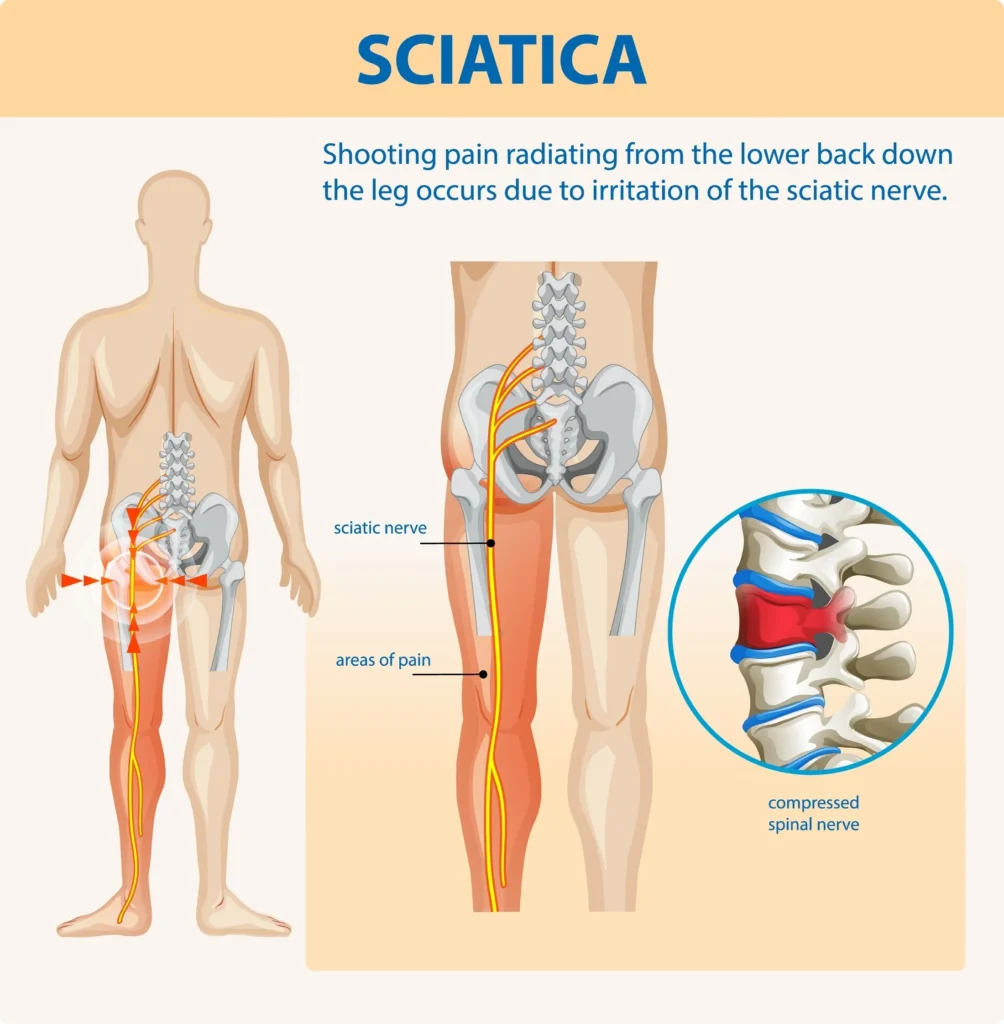
The sciatic nerve forms from several nerve roots in the lower spine. These nerve roots exit the spinal cord through small openings between vertebrae.
The nerve then travels through the pelvis and down the back of the legs.
Because this nerve covers a large area, irritation can cause symptoms in several locations, including:
• Lower back
• Buttocks
• Hips
• Back of the thigh
• Calf
• Foot
Sciatic nerve irritation often causes pain that moves down the leg rather than staying in one place.
Studies estimate that about 10 percent to 40 percent of adults experience sciatica at some point in their lives. But, what causes sciatic nerve pain?
Common Symptoms of Sciatic Nerve Pain
Sciatica symptoms vary from person to person. Some people feel mild discomfort. Others experience severe pain that affects daily movement.
Common symptoms include:
• Pain that travels from the lower back into the leg
• Burning or sharp pain in the buttock or thigh
• Numbness in the leg or foot
• Tingling sensations in the lower limb
• Muscle weakness in the leg
• Pain that worsens when sitting
Symptoms usually affect only one side of the body.
Most Common Causes of Sciatic Nerve Pain
Several conditions can place pressure on the sciatic nerve. Identifying the cause helps guide the right treatment plan.
Herniated Disc
A herniated disc is the most common cause of sciatica.
Spinal discs sit between vertebrae and act as cushions. When the inner portion of the disc pushes outward, it can press on nearby nerves.
This pressure can irritate the sciatic nerve roots.
Common signs of a herniated disc include:
• Sharp lower back pain
• Leg pain that worsens with movement
• Numbness in the leg
• Muscle weakness
Many disc injuries develop from lifting strain, repetitive bending, or sudden trauma.
Spinal Stenosis
Spinal stenosis occurs when the spaces within the spine narrow. This narrowing can compress nearby nerves.
The condition often develops with age as joints and ligaments thicken.
Spinal stenosis may cause:
• Leg pain while walking
• Numbness in the legs
• Weakness in the lower limbs
• Relief when sitting or bending forward
Older adults experience spinal stenosis more frequently.
Degenerative Disc Changes
Spinal discs gradually lose water content with age. As discs thin, the space between vertebrae decreases.
This process may lead to nerve irritation.
Degenerative disc changes can result in:
• Persistent lower back pain
• Stiffness in the spine
• Pain that radiates down the leg
These changes develop slowly but can still compress the sciatic nerve.
Piriformis Syndrome
The piriformis muscle sits deep in the buttocks. The sciatic nerve passes close to this muscle.
If the muscle tightens or becomes inflamed, it may compress the nerve.
Symptoms often include:
• Pain in the buttock
• Pain when sitting for long periods
• Pain that travels down the leg
Athletes and people who sit for long hours often develop piriformis-related sciatica.
Spinal Misalignment
Spinal joints must remain properly aligned for nerves to function normally.
If vertebrae shift out of position, they can irritate nearby nerve roots.
Misalignment may occur due to:
• Poor posture
• Repetitive stress
• Previous injuries
• Car accidents
Correcting spinal alignment can help reduce nerve pressure.
Bone Spurs
Bone spurs are small growths that develop along the edges of bones. They often form as the body responds to joint stress.
These growths can narrow nerve spaces and compress the sciatic nerve.
Bone spurs commonly occur in people with long-term spinal degeneration.
Pregnancy
Pregnancy can also trigger sciatic nerve pain.
As the uterus expands, it places pressure on nearby nerves. Hormonal changes also loosen ligaments, which may alter spinal alignment.
Sciatica during pregnancy often improves after childbirth.
Injury or Trauma
Accidents and falls can damage spinal structures.
Common injury causes include:
• Car accidents
• Sports injuries
• Heavy lifting accidents
• Sudden twisting movements
These injuries may lead to disc damage or joint dysfunction that affects the sciatic nerve.
Risk Factors That Increase Sciatica
Certain lifestyle factors increase the risk of sciatic nerve pain.
These include:
• Long hours of sitting
• Poor posture
• Lack of physical activity
• Repetitive lifting
• Excess body weight
• Weak core muscles
Addressing these factors can reduce the likelihood of recurring symptoms.
How Sciatica Is Diagnosed
Diagnosis usually begins with a physical examination.
A healthcare provider may assess:
• Range of motion
• Muscle strength
• Reflex responses
• Nerve sensitivity
Additional tests may include imaging when symptoms are severe or persistent.
These may include:
• X-rays
• MRI scans
• CT scans
These tests help identify the exact cause of nerve compression.
Treatment Options for Sciatic Nerve Pain
Treatment focuses on reducing nerve pressure and improving spinal function.
Many cases improve with conservative care.
Common treatment approaches include:
Chiropractic Care
Chiropractic care focuses on correcting spinal alignment and reducing nerve pressure.
Treatment may include:
• Spinal adjustments
• Soft tissue therapy
• Stretching programs
• Postural guidance
Restoring spinal movement helps reduce irritation around the sciatic nerve.
Physical Therapy
Targeted exercises strengthen muscles that support the spine.
Therapy often includes:
• Core strengthening
• Stretching routines
• Movement training
Stronger muscles help stabilize the spine and prevent future nerve compression.
Activity Modification
Certain daily habits worsen sciatic pain.
You may need to:
• Limit long periods of sitting
• Adjust your workstation setup
• Avoid heavy lifting temporarily
Small changes can reduce stress on the spine.
Anti-Inflammatory Care
Reducing inflammation helps calm irritated nerves.
Treatment may include physical therapies, cold therapy, or guided movement.

When You Should Seek Professional Care for Sciatic Nerve Pain
Seek medical care if you experience:
• Severe leg pain
• Progressive weakness in the leg
• Numbness that spreads
• Difficulty standing or walking
• Pain that lasts more than a few weeks
Early evaluation can prevent long-term nerve damage.
So, What Causes Sciatic Nerve Pain?
Sciatic nerve pain occurs when pressure affects the largest nerve in the body. The pain often begins in the lower back and travels through the buttocks and leg.
Common causes include herniated discs, spinal stenosis, muscle compression, spinal misalignment, and injury. Lifestyle factors such as prolonged sitting and weak core muscles can also increase risk.
Recognizing symptoms early helps prevent worsening nerve irritation. Proper diagnosis identifies the exact source of pressure affecting the nerve.
Treatment focuses on reducing nerve compression, restoring spinal movement, and strengthening supporting muscles. With the right care plan, many people recover and return to normal activity.
If you experience persistent leg pain, numbness, or weakness, a professional evaluation can help identify the cause and guide appropriate treatment.

Frequently Asked Questions
What is the main cause of sciatic nerve pain?
A herniated disc is the most common cause. The disc presses on nerve roots that form the sciatic nerve.
Does sitting make sciatica worse?
Yes. Sitting increases pressure on the lower spine and may irritate the nerve.
Can sciatica go away on its own?
Some mild cases improve within a few weeks. However, persistent symptoms should be evaluated to identify the underlying cause.
Which side of the body does sciatica affect?
Sciatica usually affects one side of the body. Pain typically travels from the lower back into one leg.
How long does sciatic nerve pain last?
Mild cases may resolve in several weeks. More severe cases may last longer if the underlying cause remains untreated.
Can chiropractic care help with sciatica?
Yes. Chiropractic adjustments can reduce spinal pressure and improve nerve function. Treatment plans often include exercises and posture correction.