
Can sciatica cause knee pain? While sciatica usually causes pain along the leg, nerve irritation in the lower back can sometimes produce symptoms around the knee. Understanding the source of the pain can help you determine when professional evaluation may be needed.
Sciatica develops when the sciatic nerve or one of the nerve roots that form it becomes irritated or compressed. The sciatic nerve starts in the lower back and travels through the buttocks and down each leg. Because of this pathway, nerve-related pain can be felt in areas far from the lower back, including the thigh, calf, and sometimes around the knee.
This can make it difficult to know whether your knee pain is coming from the knee itself or from your lower back.
For example, you may have knee pain without significant knee swelling. You may also notice tingling, numbness, burning, or pain that travels from your lower back or buttock into your leg. These features can suggest that a nerve is involved.
Understanding the difference matters because treatment depends on the cause.
In this guide, you will learn whether sciatica can cause knee pain, how nerve pain can reach the knee, what symptoms to watch for, how sciatica-related knee pain differs from common knee conditions, and when you should seek professional care.
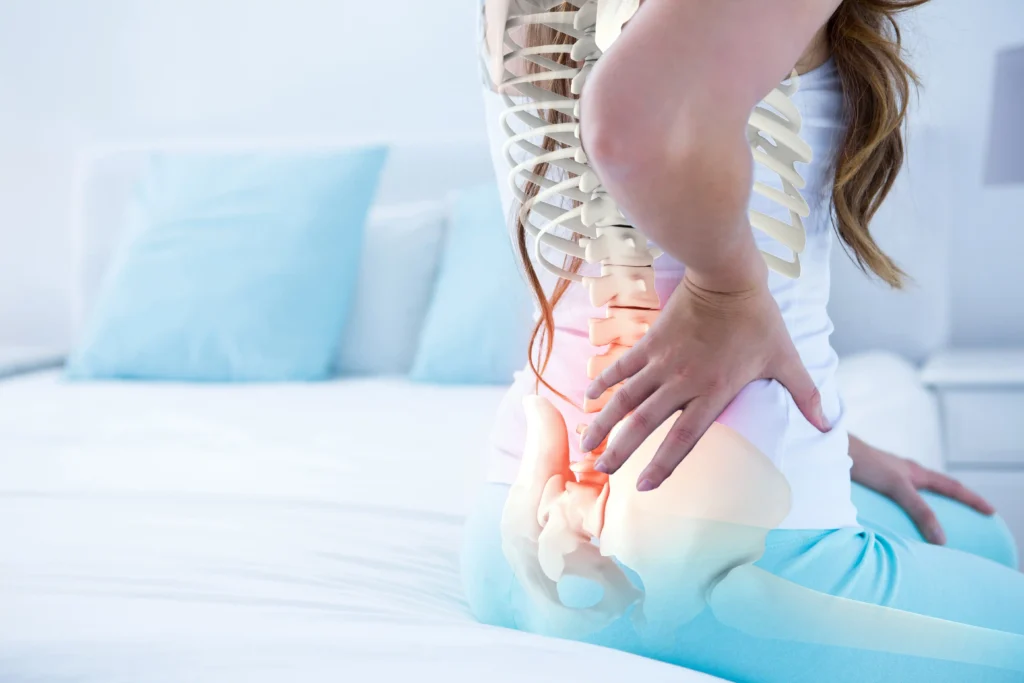
What Is Sciatica?
Sciatica refers to pain that follows the path of the sciatic nerve. It is usually caused by irritation or compression of a nerve root in the lower spine.
The sciatic nerve is formed by several nerve roots in the lower back. It then travels through the pelvis and buttocks before continuing down the leg. It is the largest nerve in the body.
Sciatica is a symptom rather than a single disease.
Several conditions can irritate the nerve roots that contribute to the sciatic nerve.
Common causes include:
• Herniated discs
• Bone spurs
• Spinal stenosis
• Degenerative changes in the spine
• Spondylolisthesis
• Certain injuries
A herniated disc is one of the most common causes. When disc material presses against a nearby nerve root, you may develop pain, numbness, tingling, or weakness along the affected nerve pathway.
Sciatica usually affects one side of the body.
The symptoms can range from a mild ache to sharp, burning, or electric shock-like pain. Some people also experience numbness or tingling in the leg or foot.
Can Sciatica Cause Knee Pain?
Yes, sciatica can contribute to pain that is felt around the knee.
However, this does not mean that every case of knee pain is caused by sciatica.
The location of nerve-related symptoms depends on which nerve root is affected. The lower spinal nerves contribute to sensation and movement in different parts of the leg. Irritation of certain lumbar nerve roots can cause symptoms in areas that include the front or side of the thigh and knee region.
This is why a person can have a problem in the lower back while feeling pain farther down the leg.
Why Can a Back Problem Cause Knee Symptoms?
Your nervous system connects the lower back with the legs.
When a nerve root becomes irritated, the brain may interpret the resulting signals as pain in the area supplied by that nerve.
This is called referred or radiating nerve pain.
The pain does not necessarily mean that the knee joint itself is damaged.
For example, you may experience:
• Lower back pain followed by leg pain
• Buttock pain that travels toward the knee
• Burning or shooting pain in the leg
• Tingling around the thigh or knee
• Numbness in part of the leg
• Weakness in the leg
These symptoms can occur together or separately.
How Does Sciatica Knee Pain Feel?
Sciatica-related knee pain can feel different from pain caused by a problem inside the knee.
Nerve pain may feel like:
Burning Pain
You may notice a burning sensation that travels through the leg.
Sharp or Shooting Pain
The pain may feel sudden and sharp. It can travel from the lower back or buttock toward the thigh and knee.
Tingling
You may feel pins and needles in the leg.
Numbness
Some areas may feel less sensitive than usual.
Electric Shock-Like Sensations
Some people describe nerve pain as a sudden jolt that travels down the leg.
Weakness
Nerve irritation can sometimes affect muscle strength.
If your leg becomes weak, you should have it evaluated rather than assuming it is ordinary knee pain.
Where Can Sciatica Pain Travel?
Sciatica symptoms can occur anywhere along the pathway of the affected nerve.
You may feel symptoms in:
• Lower back
• Buttocks
• Hip
• Thigh
• Knee area
• Calf
• Ankle
• Foot
• Toes
The exact pattern depends on which nerve root is affected.
Sciatica commonly causes symptoms along the back of the thigh and calf, but nerve-related leg symptoms can vary.
This is one reason it can be difficult to identify the source based only on where you feel pain.
Can Sciatica Cause Pain Behind the Knee?
It can.
Pain behind the knee may occur when symptoms travel along the affected nerve pathway. However, pain behind the knee can also result from several knee or soft tissue conditions.
For example, hamstring problems, arthritis, meniscus injuries, tendon problems, and other conditions can cause pain around or behind the knee.
The pattern of your symptoms matters.
If your knee pain occurs with lower back or buttock pain and travels down the leg, a nerve-related cause becomes more relevant.
If the knee is swollen, locks, becomes unstable, or hurts mainly during specific knee movements, a local knee problem may be more likely.
A physical examination is often needed to tell the difference.
Sciatica vs Knee Joint Pain
Knowing the differences between nerve-related pain and knee pain can help you decide when to seek an evaluation.
Sciatica-Related Pain
Sciatica is more likely when you have:
• Pain that travels from the lower back or buttock into the leg
• Burning or shooting pain
• Tingling
• Numbness
• Symptoms that change with certain spinal movements
• Leg weakness
• Pain that extends below the knee
Sciatica symptoms can worsen with prolonged sitting, coughing, sneezing, bending, or other activities that increase irritation of the affected nerve.
Knee Joint Pain
A problem inside the knee may be more likely when you have:
• Knee swelling
• Pain directly around the joint
• Pain when bending or straightening the knee
• Clicking or locking
• Knee instability
• Pain after a direct knee injury
• Tenderness around a specific knee structure
These signs do not provide a diagnosis by themselves. Several conditions can produce similar symptoms.
Common Knee Conditions That Can Mimic Sciatica
It is important to avoid assuming that knee pain is coming from the spine.
Several conditions can cause symptoms that overlap with nerve-related pain.
Knee Osteoarthritis
Osteoarthritis can cause pain, stiffness, swelling, and reduced movement.
Pain may become more noticeable during activities such as walking, climbing stairs, or standing up from a chair.
Meniscus Injury
A meniscus tear can cause pain, swelling, clicking, catching, or locking.
It may develop after twisting the knee or from gradual wear.
Patellofemoral Pain
Pain around the kneecap can occur with activities such as squatting, running, climbing stairs, or sitting for long periods.
Patellar Tendon Problems
Irritation of the patellar tendon can cause pain below the kneecap.
It is common in people who participate in activities involving repeated jumping or running.
Ligament Injuries
An injured knee ligament can cause pain and instability.
Some injuries occur after sudden changes in direction, falls, or sports-related trauma.
How Can You Tell If Your Knee Pain Is Coming From Your Back?
You cannot reliably determine the cause from the location of the pain alone.
A professional evaluation can help identify whether your symptoms are related to the knee, lower back, hip, or another structure.
However, certain patterns may provide useful clues.
Look at the Entire Symptom Pattern
Ask yourself:
Do you also have lower back pain?
Back pain combined with radiating leg symptoms may point toward a nerve-related problem.
Does the pain travel?
Pain that moves from your lower back or buttock into your leg is more consistent with nerve irritation than isolated knee pain.
Do you have numbness or tingling?
These symptoms can occur when a nerve is irritated.
Do you notice weakness?
Leg weakness can indicate more significant nerve involvement and should be evaluated.
Is your knee swollen?
Visible swelling can suggest a problem within or around the knee itself.
Did the symptoms begin after a knee injury?
A direct injury, twisting motion, or fall may point toward a local knee condition.
What Causes Sciatica?
Several conditions can irritate the nerve roots that form the sciatic nerve.
Herniated Disc
A herniated disc occurs when part of the soft inner material of a spinal disc pushes through a weakened or damaged outer layer.
If the displaced material presses against a nerve root, it can produce sciatica symptoms.
Bone Spurs
Bone spurs can develop as part of age-related changes in the spine.
In some cases, they can narrow the space around spinal nerves and contribute to nerve irritation.
Spinal Stenosis
Spinal stenosis occurs when spaces around the spinal nerves become narrower.
This can put pressure on nerves and cause pain or other symptoms in the legs.
Spondylolisthesis
This condition occurs when one vertebra slips forward relative to another.
It can sometimes contribute to narrowing around the nerves.
Injury
A significant injury to the lower back can affect spinal structures and contribute to nerve irritation.
Other Causes
Less common causes include tumors, cysts, and other conditions that place pressure on spinal nerves.
When Should You See a Healthcare Professional?
You should seek an evaluation if your knee pain continues, keeps returning, or affects your normal activities.
An evaluation is especially important when your knee pain occurs with:
• Lower back pain
• Buttock pain
• Tingling
• Numbness
• Burning sensations
• Leg weakness
• Pain that travels down the leg
You should also seek care if your symptoms are getting worse rather than improving.
Mild sciatica often improves with time and conservative care, but persistent or severe symptoms should be assessed.
Seek Immediate Medical Attention for Warning Signs
Some symptoms require urgent evaluation.
Seek immediate medical care if you develop:
• Sudden or worsening leg weakness
• Loss of bladder control
• Loss of bowel control
• Numbness around the groin or inner thighs
• Severe symptoms following a significant accident
These symptoms can indicate serious nerve compression and should not be managed with home care alone.
How Is Sciatica-Related Knee Pain Treated?
Treatment depends on what is causing your symptoms. If your knee pain comes from irritation of a nerve in the lower back, treatment usually focuses on reducing irritation, improving movement, and restoring strength.
If the pain comes from the knee itself, the treatment plan will be different.
This is why an accurate assessment matters before starting treatment.
For many people with uncomplicated sciatica, conservative care can help manage symptoms. Treatment may include activity modification, therapeutic exercise, physical therapy, medication when appropriate, and other nonoperative approaches.
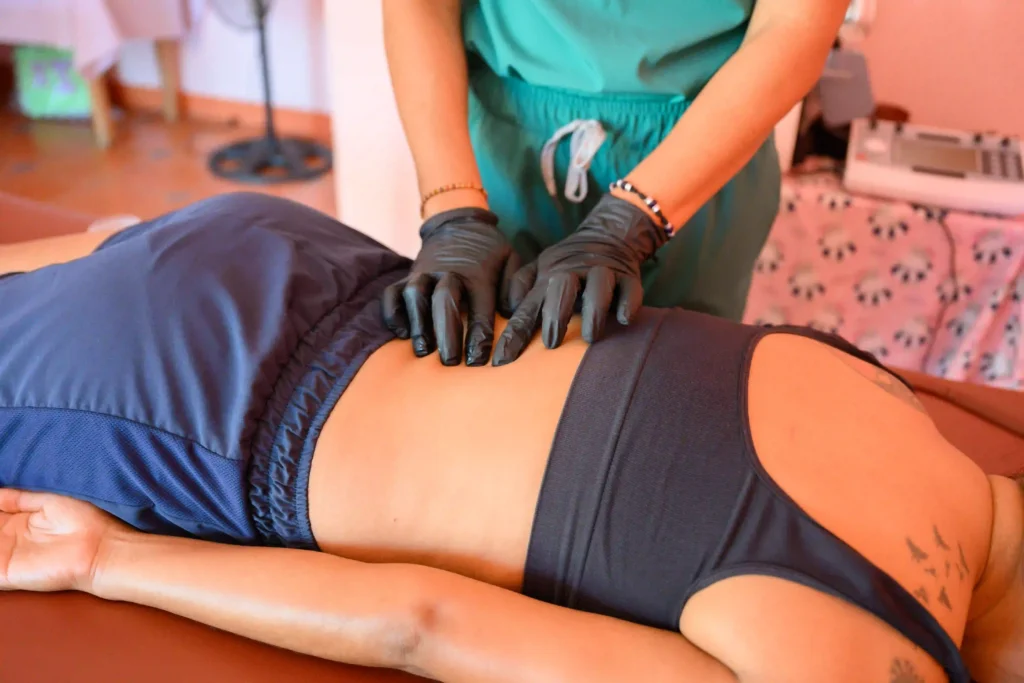
Chiropractic Care for Sciatica
Chiropractic care may be appropriate for some people with lower back and leg symptoms.
A chiropractor can assess your spine, hips, pelvis, and lower extremities to identify movement restrictions and other musculoskeletal factors that may contribute to your symptoms.
Treatment may include manual therapy, therapeutic exercises, soft tissue techniques, and other conservative approaches.
The goal is to improve function and help you return to normal activities while monitoring your symptoms.
Chiropractic care should be based on your individual examination. It is not appropriate for every cause of knee or leg pain.
Chiropractic Adjustments
A chiropractor may use spinal manipulation or other manual techniques when appropriate.
The purpose is to improve spinal movement and reduce musculoskeletal restrictions.
Your chiropractor should consider your medical history, symptoms, examination findings, and any risk factors before recommending the chiropractic adjustment.
If your symptoms include significant neurological changes, such as progressive weakness or severe numbness, you may need medical evaluation before receiving routine conservative treatment.
Therapeutic Exercises
Exercise is an important part of managing many cases of sciatica.
Your exercise program should match your symptoms and physical ability.
Exercises may focus on:
• Improving hip mobility
• Strengthening the core
• Strengthening the glute muscles
• Improving lower body control
• Supporting better spinal movement
• Gradually increasing your activity level
You should not force an exercise that causes sharp, worsening, or spreading pain.
A qualified healthcare professional can help determine which exercises are appropriate for you.
Exercises That May Help Sciatica Symptoms
The right exercises depend on the cause and severity of your symptoms. A few commonly used movements may be included in a rehabilitation program.
Walking
Walking is often a practical way to stay active.
If sitting makes your symptoms worse, short walks throughout the day may be more comfortable than remaining seated for long periods.
Start with a manageable distance.
For example, you might walk for 5 to 10 minutes and gradually increase the duration as tolerated.
Gentle Hamstring Stretch
Tight muscles can affect how your lower body moves.
A gentle hamstring stretch may be included in your rehabilitation plan.
Avoid aggressive stretching if it increases shooting, burning, tingling, or numbness in your leg.
Glute Strengthening
Strong glute muscles help support your hips and lower body.
Exercises such as bridges may be recommended when appropriate.
A basic bridge involves lying on your back with your knees bent, tightening your abdominal muscles, and lifting your hips in a controlled manner.
Your healthcare provider can show you the correct technique and determine whether this exercise is appropriate.
Core Strengthening
Your abdominal and trunk muscles help support your spine during movement.
A gradual core strengthening program can improve physical function and help you return to normal activities.
The exercises should progress based on your symptoms and strength.
Spinal Decompression and Sciatica
Spinal decompression is sometimes offered as part of conservative chiropractic care.
The term can refer to different treatment methods. Some approaches use mechanical traction to apply controlled forces to the spine.
The evidence for traction in sciatica is mixed, and it should not be presented as a guaranteed treatment.
Your provider should explain what treatment is being recommended, why it may be appropriate for your condition, and what other options are available.
If your symptoms are caused by a condition that requires medical or surgical treatment, decompression should not delay appropriate care.
Soft Tissue Therapy
Muscle tension can occur alongside lower back and leg problems.
Soft tissue therapy may be used to address tight muscles around the lower back, hips, thighs, and legs.
Treatment may include hands-on techniques directed at muscles and other soft tissues.
Potential goals include:
• Reducing muscle tension
• Improving movement
• Supporting exercise
• Reducing discomfort
Soft tissue treatment should be part of a broader care plan when appropriate.
Massage Therapy and Sciatica
Massage therapy may help some people manage muscle tension and discomfort associated with lower back problems.
Massage does not remove a herniated disc or directly correct every cause of sciatica.
However, it may help you feel more comfortable while you work on mobility and strength.
If massage increases your symptoms, especially numbness, tingling, or shooting pain, stop the treatment and discuss your symptoms with a healthcare professional.
What Can You Do at Home for Sciatica-Related Knee Pain?
Your daily habits can affect how your symptoms feel.
Avoid Long Periods of Sitting
Long periods of sitting may aggravate symptoms in some people.
If you work at a desk, stand up and move regularly.
You can also change positions throughout the day.
Use Comfortable Positions
Find a sitting and sleeping position that does not increase your symptoms.
Some people feel more comfortable sleeping on their side with a pillow between their knees.
Others prefer lying on their back with support under their knees.
Choose the position that works best for you.
Stay Active
Complete bed rest is generally not recommended for routine sciatica.
Try to maintain normal daily activity as much as your symptoms allow.
Start with short periods of walking and increase activity gradually.
Use Heat or Cold
Heat may help relax tight muscles.
Cold may help reduce discomfort after certain activities or acute injuries.
Use a protective layer between your skin and the heat or cold source.
Do not apply extreme temperatures directly to your skin.
Lift Carefully
When lifting objects, keep the load close to your body.
Avoid sudden twisting while carrying something heavy.
If an object is too heavy, ask for assistance.
How Is Sciatica Diagnosed?
A healthcare professional usually starts with your medical history and physical examination.
The examination may include:
Neurological Testing
Your provider may check:
• Muscle strength
• Reflexes
• Sensation
• Walking ability
These tests can help identify signs of nerve involvement.
Range of Motion Testing
Your lower back and legs may be assessed during different movements.
The provider will observe whether certain movements reproduce your symptoms.
Leg Movement Tests
Specific tests can help determine whether a spinal nerve is irritated.
Your provider may move your leg in controlled positions and monitor your response.
Do You Need an MRI for Sciatica?
Not everyone with sciatica needs an MRI.
Imaging is usually considered when symptoms are severe, persistent, worsening, or associated with neurological findings. It may also be needed when the results could change treatment decisions.
An MRI can provide detailed images of spinal discs, nerves, and other soft tissues.
However, imaging findings do not always explain pain.
Some people have disc changes on an MRI without symptoms.
Your healthcare provider will determine whether imaging is appropriate based on your symptoms and examination.
Can Sciatica Go Away on Its Own?
Many cases of sciatica improve with time.
The course depends on the cause, severity, and individual health factors.
Some people improve within several weeks with conservative treatment. Others have symptoms that persist or return.
If your symptoms are improving, you may be able to gradually return to normal activities.
If your pain continues for several weeks, becomes more severe, or interferes with daily life, schedule an evaluation.
Persistent symptoms deserve attention because the underlying cause may need additional treatment.
Can Chiropractic Care Help Prevent Future Sciatica Symptoms?
No treatment can guarantee that sciatica will never return.
However, maintaining strength, mobility, and healthy movement habits may reduce the risk of recurring problems.
A long-term plan may include:
• Regular physical activity
• Core strengthening
• Hip strengthening
• Maintaining a healthy weight
• Improving lifting technique
• Taking breaks from prolonged sitting
• Maintaining good sleep habits
• Following your prescribed rehabilitation program
The goal is to keep your body moving and address factors that may contribute to repeated symptoms.

When Is Surgery Considered?
Most people with uncomplicated sciatica do not need surgery.
Surgery may be considered when symptoms are severe, persistent, or associated with significant neurological problems.
For example, a surgeon may consider an operation when a structural problem is causing persistent nerve compression and conservative treatment has not provided adequate improvement.
Emergency evaluation is required when symptoms suggest severe nerve compression, such as new loss of bladder or bowel control or numbness around the groin and inner thigh area.
The decision about surgery should be made with an appropriately qualified medical specialist after reviewing your symptoms, examination, and imaging when indicated.
Frequently Asked Questions
1. Can sciatica cause knee pain without back pain?
Yes. Sciatica or other lumbar nerve problems can sometimes produce leg symptoms even when back pain is mild or absent. However, isolated knee pain has many possible causes, so an examination is important.
2. How can I tell if my knee pain is caused by sciatica?
Look for symptoms such as pain traveling from the lower back or buttock into the leg, tingling, numbness, burning, or weakness. These features suggest nerve involvement. Swelling, locking, or pain directly triggered by knee movement may point toward a local knee problem.
3. Can sciatica cause pain behind the knee?
It can. Nerve-related pain may travel into the knee region. However, hamstring problems, meniscus injuries, arthritis, and tendon conditions can also cause pain behind the knee.
4. Can a chiropractor help sciatica that causes knee pain?
A chiropractor may help some people with uncomplicated sciatica through conservative care that may include manual therapy and therapeutic exercise. The appropriate treatment depends on the cause and your examination findings.
5. Should I see a chiropractor or an orthopedic doctor for knee pain?
It depends on your symptoms. A musculoskeletal evaluation can help determine whether the problem appears to involve the spine, knee, hip, or another structure. Severe injuries, major weakness, significant swelling, or other concerning symptoms may require medical or orthopedic evaluation.
6. Can a herniated disc cause knee pain?
A herniated disc can irritate a spinal nerve and cause pain or other symptoms in the leg. Whether it causes symptoms around the knee depends on which nerve root is affected.
7. Does walking help sciatica?
Gentle walking can help you stay active while recovering. Start with a comfortable amount and increase gradually. If walking significantly worsens your symptoms, speak with a healthcare professional.
8. How long does sciatica-related knee pain last?
The duration varies. Many uncomplicated cases improve over several weeks, but some symptoms can persist longer. If your symptoms are getting worse or are not improving, seek an evaluation.
9. Can knee exercises make sciatica worse?
They can if the exercise is inappropriate for your condition or performed too aggressively. Stop an exercise that causes sharp, spreading, or increasing nerve symptoms and ask a healthcare professional for guidance.
10. When is knee pain with sciatica an emergency?
Seek immediate medical care if you develop new or worsening leg weakness, loss of bladder or bowel control, or numbness around the groin or inner thighs. These can be signs of serious nerve compression.
Conclusion
Sciatica can cause pain and other symptoms that extend into the leg, and in some cases those symptoms may be felt around the knee. This can make it difficult to determine whether the problem is coming from the knee joint or the lower back.
The pattern of your symptoms provides useful information. Knee pain combined with lower back or buttock pain, burning, tingling, numbness, or pain that travels down the leg may suggest nerve involvement. Swelling, locking, instability, or pain after a direct knee injury may point toward a problem within the knee.
You should not try to diagnose the source of your pain based only on where it hurts. A proper evaluation can assess your lower back, hips, knee, muscles, joints, and neurological function.
At Apex Chiropractic & Wellness, an evaluation can help identify musculoskeletal factors contributing to your symptoms and determine whether conservative chiropractic care is appropriate. Treatment may include manual therapy, therapeutic exercises, soft tissue techniques, and guidance on activity and movement.
If your knee pain continues, keeps returning, or occurs with numbness, tingling, weakness, or radiating leg pain, consider getting evaluated. If you develop severe weakness, bladder or bowel changes, or numbness around the groin area, seek urgent medical attention.