
If you have been dealing with chronic pain that has not improved with rest, medication, or physical therapy, you may have heard about shockwave therapy. This non-invasive treatment has become increasingly popular for treating tendon injuries, muscle pain, plantar fasciitis, and other musculoskeletal conditions.
This non-invasive treatment stimulates the body’s natural healing response without surgery or injections. Many healthcare providers include it as part of a comprehensive treatment plan to help reduce pain, improve mobility, and support tissue repair.
This guide explains what ESWT is, how it works, what conditions it treats, and what you can expect during treatment.
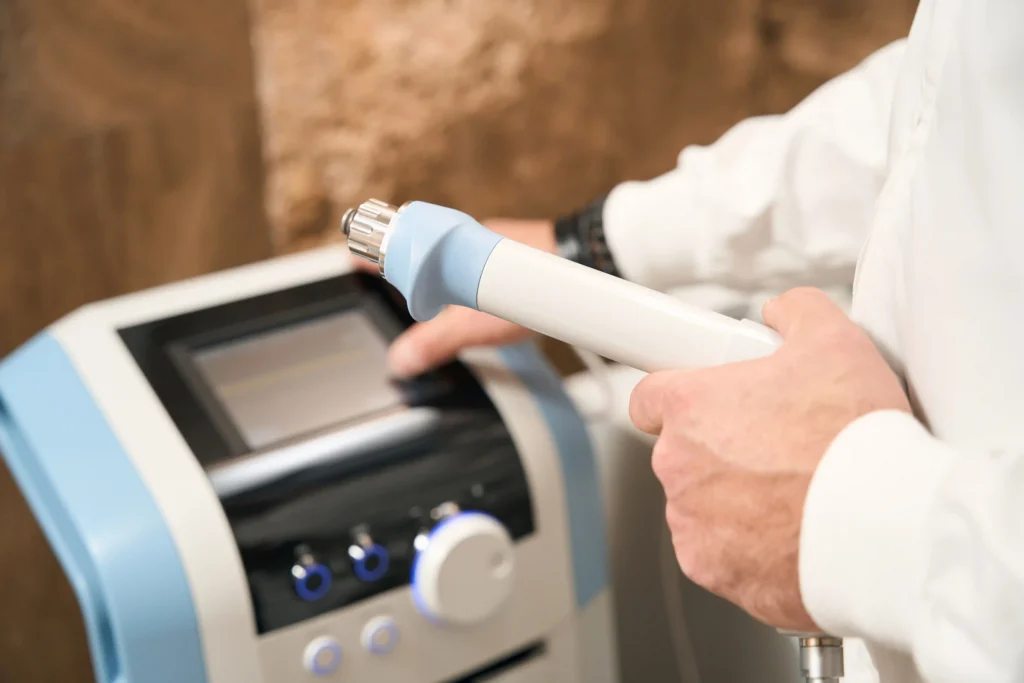
What Is Shockwave Therapy?
Shockwave therapy, also known as Extracorporeal Shockwave Therapy (ESWT), is a non-surgical treatment that delivers acoustic sound waves to injured tissues.
These sound waves pass through the skin and target damaged muscles, tendons, ligaments, and connective tissues.
The treatment is designed to stimulate the body’s natural healing processes. It does not involve surgery, needles, or medication.
Shockwave therapy is commonly used by chiropractors, sports medicine providers, orthopedic specialists, and rehabilitation professionals.
How Does Shockwave Therapy Work?
The treatment uses a handheld device that sends controlled acoustic waves into the affected area.
These sound waves create mechanical stimulation within injured tissues.
What Happens During Treatment?
The acoustic waves may help:
• Increase blood circulation
• Stimulate tissue repair
• Break down calcified tissue
• Reduce muscle tension
• Improve mobility
• Support collagen production
Rather than simply masking pain, shockwave therapy aims to encourage the body’s own healing response.
Types of Shockwave Therapy
Different types of shockwave therapy are available depending on the condition being treated.
Radial Shockwave Therapy
Radial shockwave therapy delivers sound waves that spread over a broader treatment area.
It is commonly used for:
Muscle Tightness
Large muscle groups often respond well to radial therapy.
Tendon Injuries
It is frequently used for chronic tendon pain.
Soft Tissue Conditions
Many rehabilitation clinics use this method for soft tissue injuries.
Focused Shockwave Therapy
Focused shockwave therapy delivers energy deeper into specific tissues.
It may be used when providers need to target a smaller area with greater precision.
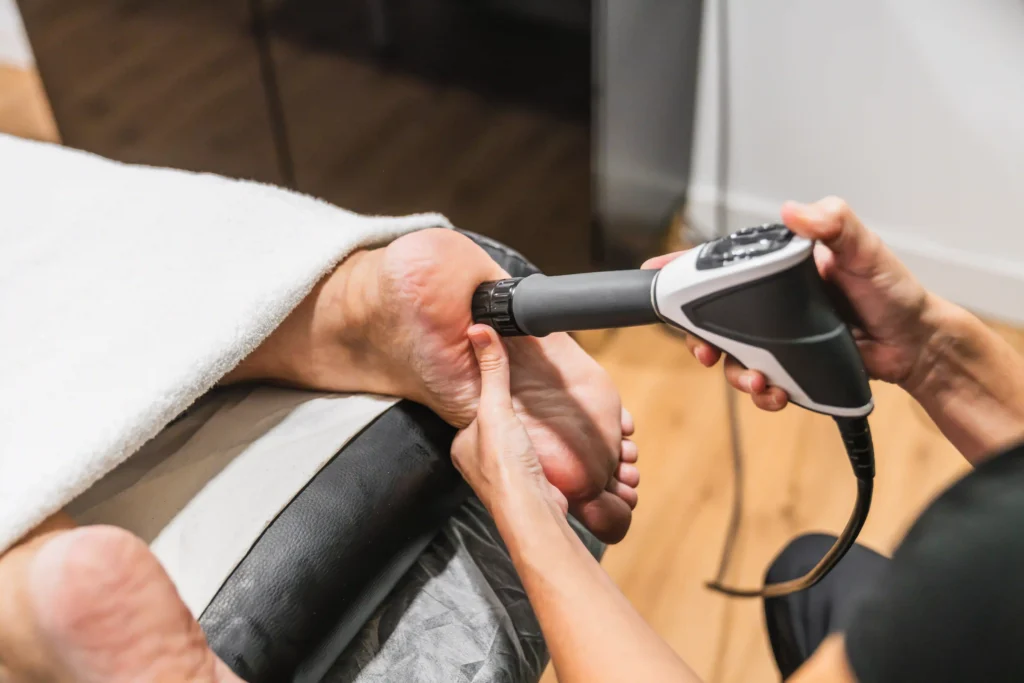
Conditions Shockwave Therapy May Help Treat
This therapy is commonly used for chronic musculoskeletal conditions.
Plantar Fasciitis
Heel pain caused by plantar fasciitis is one of the most common reasons people seek this treatment.
Many patients experience pain with their first steps in the morning.
Tennis Elbow
Pain on the outside of the elbow may develop from repetitive wrist and arm movements.
The treatment may help support tendon healing.
Golfer’s Elbow
Pain on the inside of the elbow may respond to conservative treatment that includes shockwave therapy.
Achilles Tendinopathy
The Achilles tendon connects the calf muscles to the heel bone.
Repeated stress may lead to pain and stiffness.
Shoulder Tendinitis
Inflamed shoulder tendons may cause pain when reaching overhead or lifting objects.
Calcific Shoulder Tendinitis
Some shoulder conditions involve calcium deposits within tendons.
This treatment may help break down these deposits over time.
Patellar Tendinopathy
Often called jumper’s knee, this condition affects the tendon below the kneecap.
Athletes commonly experience this injury.
Chronic Muscle Pain
Shockwave therapy may also be used to address persistent muscle tightness and trigger points.
Benefits of Shockwave Therapy
Every patient responds differently, but many people notice improvements after a series of treatments.
Non-Surgical Treatment
The procedure does not require incisions or anesthesia.
Most patients return to normal activities shortly after treatment.
Short Treatment Sessions
Appointments typically last between 15 and 30 minutes.
Minimal Recovery Time
Unlike surgery, there is little downtime following treatment.
Improved Mobility
Reducing tissue irritation may help improve movement.
Reduced Pain
Many patients report gradual pain reduction during their treatment plan.
Supports Natural Healing
Rather than covering symptoms, shockwave therapy encourages biological healing processes.
What Happens During a Shockwave Therapy Session?
Knowing what to expect can make your first appointment less stressful.
Initial Consultation
Your provider begins with a detailed evaluation.
Medical History
You will discuss:
• Your symptoms
• Previous injuries
• Medical conditions
• Current medications
Physical Examination
The provider identifies the exact treatment area through movement testing and palpation.
Preparing for Treatment
A conductive gel is applied to the skin.
The handheld device is then placed over the affected area.
During the Procedure
The device delivers a series of acoustic pulses.
Most patients describe the sensation as mild tapping or repetitive pressure.
Some discomfort is normal, especially over injured tissues.
Treatment intensity can often be adjusted based on your comfort level.
After Treatment
Most patients return to normal daily activities immediately.
Some mild soreness may occur for 24 to 48 hours.
How Many Sessions Will You Need?
Treatment plans vary depending on the condition.
Many patients receive:
• Three to six treatment sessions
• One session each week
• Periodic reassessment throughout care
Chronic conditions may require additional visits.
Is Shockwave Therapy Painful?
The experience varies.
Most patients tolerate treatment well.
You may notice:
• Mild discomfort
• Temporary soreness
• Tenderness during treatment
These sensations usually decrease as healing progresses.

Is Shockwave Therapy Safe?
This therapy is generally considered safe when performed by trained healthcare professionals.
Serious complications are uncommon.
Possible Side Effects
Temporary side effects may include:
• Mild redness
• Temporary swelling
• Minor bruising
• Soreness for one or two days
These effects usually resolve without additional treatment.
Who Should Not Receive Shockwave Therapy?
Shockwave therapy may not be appropriate for everyone.
Your provider may recommend another treatment if you have:
• A bleeding disorder
• A blood clotting condition
• An active infection
• A fracture in the treatment area
• Certain nerve disorders
• Pregnancy, depending on the treatment location
A complete evaluation helps determine whether this therapy is appropriate for your condition.
Shockwave Therapy and Chiropractic Care
Many chiropractic clinics include shockwave therapy as part of a broader treatment plan.
Combining therapies often addresses multiple causes of pain.
Treatment May Include
Chiropractic Adjustments
Improving joint movement may reduce stress on surrounding tissues.
Soft Tissue Therapy
Manual therapy may help reduce muscle tightness.
Therapeutic Exercises
Exercise strengthens muscles that support injured areas.
Stretching Programs
Flexibility exercises may improve movement and reduce stiffness.
This combination helps patients improve function while supporting long term recovery.
Tips Before Your Appointment
Simple preparation can improve your experience.
Stay Hydrated
Drink water before your appointment.
Wear Comfortable Clothing
Loose clothing allows easy access to the treatment area.
Share Your Medical History
Inform your provider about medications, surgeries, and previous injuries.
Follow Post Treatment Instructions
Your provider may recommend avoiding strenuous activity for a short period after treatment.
Frequently Asked Questions
What is shockwave therapy used for?
This therapy is commonly used to treat chronic tendon injuries, plantar fasciitis, shoulder pain, elbow pain, Achilles tendinopathy, and muscle related conditions.
Does shockwave therapy hurt?
Most patients experience mild discomfort during treatment, but the sensation is generally well tolerated.
How long does a shockwave therapy session take?
Most appointments last between 15 and 30 minutes.
How many treatments will I need?
Many patients receive three to six sessions, although treatment plans vary based on the condition.
Is shockwave therapy better than surgery?
For many chronic musculoskeletal conditions, healthcare providers recommend conservative treatment before considering surgery.
Can shockwave therapy be combined with chiropractic care?
Yes. Many chiropractic clinics combine this therapy with chiropractic adjustments, soft tissue therapy, and therapeutic exercises to improve overall outcomes.
Conclusion
Shockwave therapy is a non-invasive treatment that uses acoustic sound waves to stimulate the body’s natural healing response. It is commonly used for chronic tendon injuries, plantar fasciitis, shoulder pain, elbow pain, and other musculoskeletal conditions.
Many patients choose this treatment because it requires no surgery, minimal recovery time, and can be combined with other conservative treatments such as chiropractic care, soft tissue therapy, and therapeutic exercises. While every recovery is different, many people experience gradual improvements in pain, mobility, and daily function after completing their treatment plan.
If persistent pain is affecting your work, exercise routine, or everyday activities, schedule an appointment for a professional evaluation to determine whether shockwave therapy is an appropriate option for your condition.