Runner’s knee is a common cause of pain around the front of the knee. Despite its name, you do not have to be a runner to develop it. People who walk, cycle, squat, climb stairs, or participate in sports that involve repeated bending of the knee can also experience this condition.
Runner’s knee is commonly associated with patellofemoral pain syndrome, a condition that causes pain around or behind the kneecap. The pain often becomes worse when you run, climb stairs, squat, kneel, or sit with your knee bent for a long time. It is especially common in people who suddenly increase their training or repeatedly perform activities that load the knee.
The good news is that many cases can be managed with conservative care. Treatment often focuses on reducing activities that trigger pain, improving strength, correcting movement patterns, and gradually returning to normal activity.
If you are dealing with knee pain while running or exercising, understanding the cause can help you make better decisions about treatment.
What Is a Runner’s Knee?
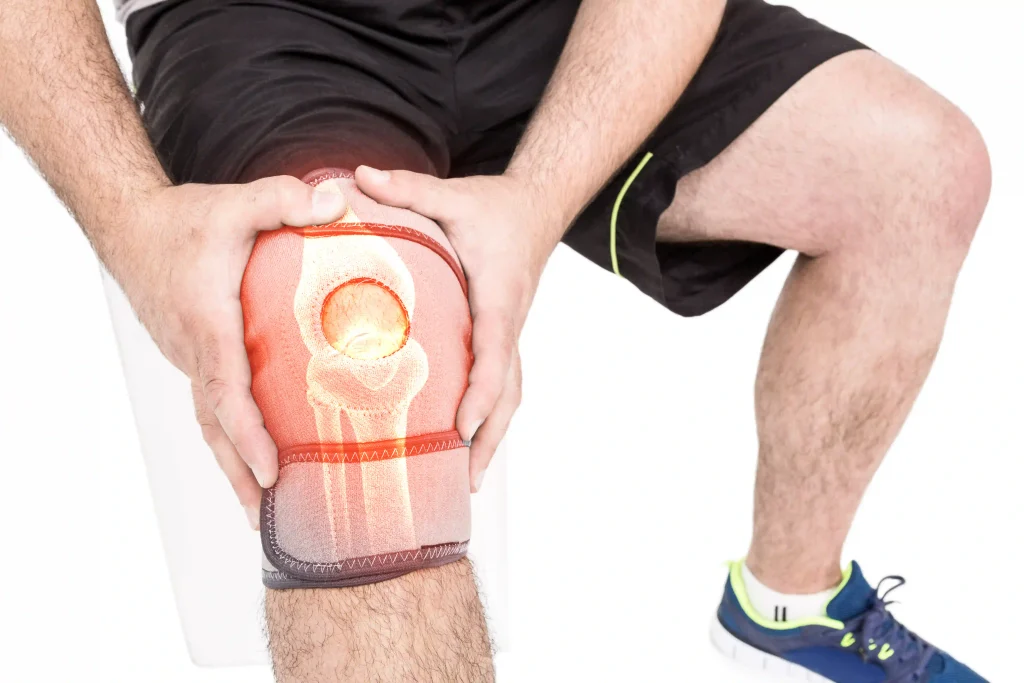
Runner’s knee is a common term for pain around the kneecap. In many cases, it refers to patellofemoral pain syndrome.
The patella, or kneecap, sits at the front of your knee. It moves along a groove at the end of your thigh bone when you bend and straighten your leg.
Your hips, thighs, lower legs, and feet all influence how the knee moves.
When movement or training places repeated stress on the area around the kneecap, pain may develop.
Runner’s knee is common among runners and people who participate in jumping sports. It can also affect people who have recently changed their exercise routine or increased their activity level.
The condition does not mean that your knee is permanently damaged.
It also does not mean that you must stop exercising forever.
The right approach usually involves identifying what is irritating the knee, adjusting your activity, and gradually rebuilding strength and tolerance.
What Causes Runner’s Knee?
Runner’s knee can develop for several reasons. There is often more than one contributing factor.
Overuse
Repeated knee movement can place stress on the tissues around the kneecap.
Running is a common trigger because each stride places repeated load on the lower body.
The risk can increase when you suddenly:
• Increase your running distance.
• Add more running days.
• Increase your speed.
• Add hills.
• Start interval training.
• Begin jumping or plyometric exercises.
Your body needs time to adapt to changes in training volume and intensity.
Sudden Changes in Training
A common example is increasing your weekly running distance from 10 miles to 20 miles within a short period.
Even if you previously ran without pain, a sudden increase can exceed your current capacity.
The same principle applies to other activities.
If you usually walk 30 minutes and suddenly begin hiking for several hours, your knees may need time to adapt.
Weak Hip Muscles
Your hip muscles help control the position of your leg during movement.
Weakness or poor control around the hip may allow the knee to move inward during activities such as squatting, stepping down, or landing from a jump.
This movement pattern can increase stress around the knee.
Strengthening the hips and thighs is commonly included in rehabilitation programs for patellofemoral pain.
Quadriceps Weakness
Your quadriceps are the muscles at the front of your thigh.
They help control knee movement and support the joint during walking, running, squatting, and jumping.
Weakness may affect how you control your knee during activity.
Limited Flexibility
Tight muscles around the hips, thighs, and lower legs can affect movement.
Limited flexibility does not automatically cause runner’s knee, but it can contribute to movement limitations in some people.
A professional assessment can determine whether mobility restrictions are relevant to your symptoms.
Poor Movement Mechanics
Your knee does not work alone.
Your hip, pelvis, ankle, and foot influence how your leg moves.
For example, your knee may move inward while you run, squat, or land from a jump.
A movement assessment can help identify whether this pattern contributes to your symptoms.
Previous Knee Injury
A previous knee injury can change how you move.
You may unconsciously protect the injured side by shifting more weight to another part of your body.
This can affect how your knee handles activity.
Who Is Most Likely to Develop a Runner’s Knee?
A runner’s knee can affect anyone, but certain situations may increase your risk.
Runners
Running involves repeated loading of the knee.
Increasing training too quickly may increase your risk.
Athletes
Sports involving running, jumping, cutting, and repeated squatting can place significant demands on the knee.
Basketball, soccer, volleyball, tennis, and similar activities can trigger symptoms.
People Starting a New Exercise Program
Starting a new workout routine can place unfamiliar stress on your muscles and joints.
Gradually increasing activity can give your body more time to adapt.
People Returning to Exercise
If you have taken several weeks or months away from exercise, returning at your previous intensity may be too much.
A gradual progression is usually easier for your body to tolerate.
What Are the Symptoms of a Runner’s Knee?
The main symptom is pain around the front of the knee.
The pain may be dull or aching rather than sharp.
Pain Around the Kneecap
You may feel pain directly around or behind the kneecap.
It may be difficult to identify one exact point of pain.
Pain During Running
Running can increase symptoms, especially when you increase speed, distance, or hills.
Pain While Using Stairs
Walking up or down stairs often increases pressure around the kneecap.
You may notice pain on each step.
Pain During Squats
Squatting bends the knee while placing load through the joint.
If you have a runner’s knee, squatting may increase discomfort.
Pain After Sitting
You may experience pain after sitting with your knee bent for an extended period.
This is sometimes called the “movie theater sign” because symptoms can become noticeable after sitting through a movie or long car ride.
Mild Swelling or Tenderness
Some people may experience tenderness around the knee.
Significant swelling is less typical of uncomplicated patellofemoral pain and may suggest another condition that needs evaluation.
What Does a Runner’s Knee Feel Like?
Runner’s knee usually causes pain at the front of the knee.
You may notice:
• A dull ache around the kneecap.
• Pain during stairs.
• Discomfort during squats.
• Pain after prolonged sitting.
• Symptoms that increase during running.
• Pain that improves when you reduce the activity that triggers it.
The exact symptoms can vary.
If you experience severe pain, significant swelling, locking, or an inability to bear weight, do not assume that you have a runner’s knee.
Other knee injuries can cause similar symptoms.
Runner’s Knee vs Other Knee Problems
Several knee conditions can cause pain during exercise.
This makes an accurate assessment important.
Runner’s Knee vs Meniscus Injury
A meniscus injury may cause pain, swelling, catching, or locking.
It can occur after twisting the knee, although degenerative meniscus changes can also develop gradually.
Runner’s Knee vs Patellar Tendinitis
Patellar tendinitis affects the tendon connecting the kneecap to the shin bone.
Pain is often felt below the kneecap and may be related to jumping or repetitive loading.
Runner’s Knee vs Osteoarthritis
Osteoarthritis is more common with increasing age and can cause pain, stiffness, swelling, and reduced movement.
It may affect several parts of the knee joint.
Runner’s Knee vs Ligament Injury
Ligament injuries often occur after a sudden twisting motion, collision, or change in direction.
Instability or a feeling that the knee is giving way may occur.
Knee pain has many possible causes, including ligament injuries, meniscus tears, arthritis, tendinitis, bursitis, and patellofemoral pain.
How Is a Runner’s Knee Diagnosed?
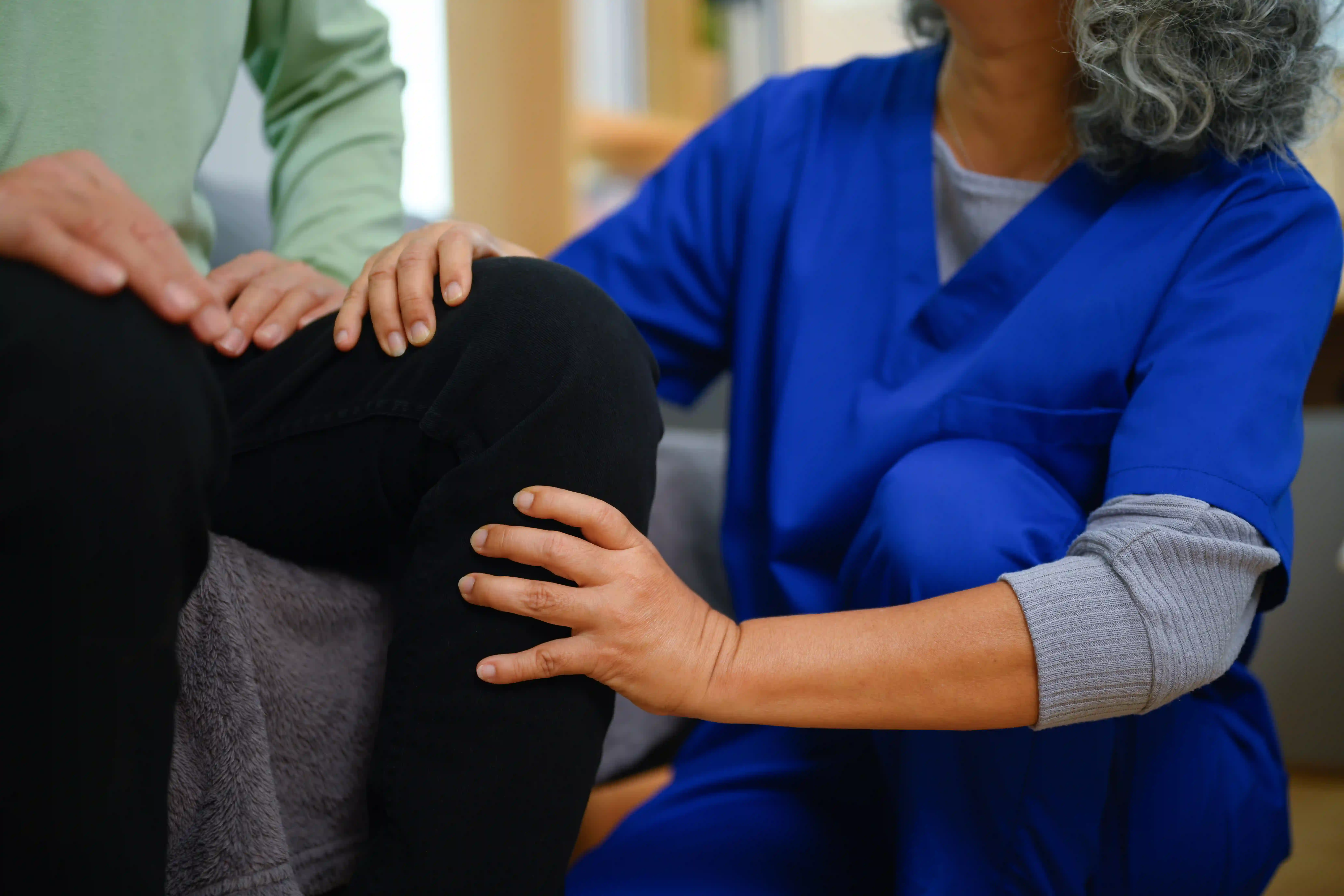
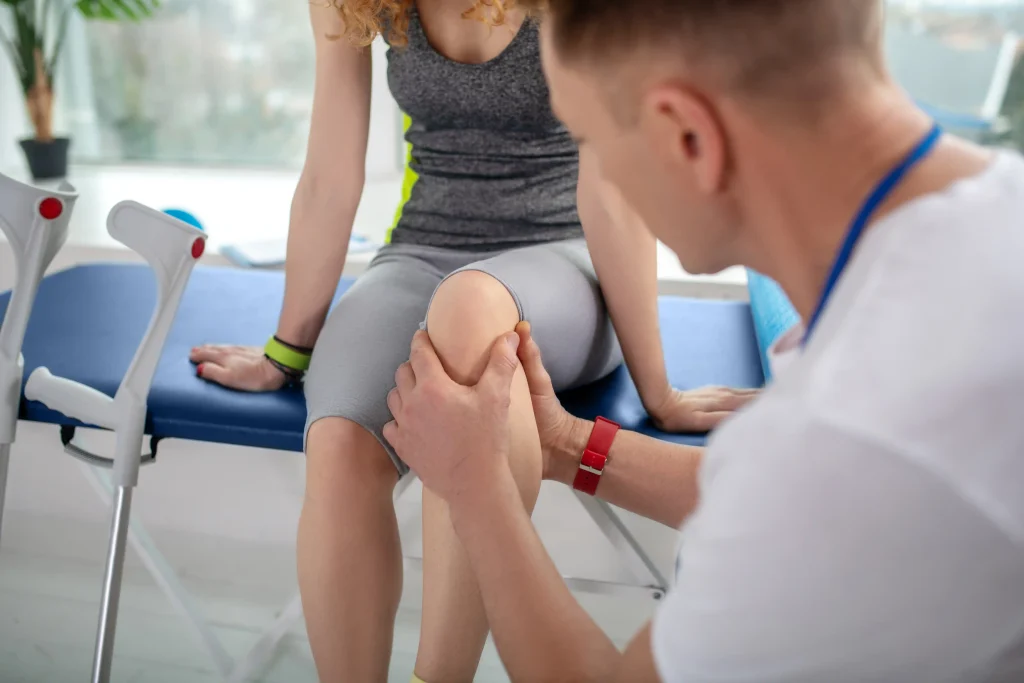
A diagnosis usually begins with a medical history and physical examination.
Your Activity History
Your provider may ask:
• How often do you run?
• Did you recently increase your mileage?
• Did you change your shoes?
• Did you add hills or speed work?
• When did the pain begin?
• Which activities make the pain worse?
These details can help identify possible triggers.
Physical Examination
Your provider may evaluate:
• Knee range of motion.
• Hip strength.
• Quadriceps strength.
• Leg alignment.
• Walking mechanics.
• Squatting mechanics.
• Movement during a step-down test.
• Tenderness around the knee.
Imaging
Imaging is not always necessary for patellofemoral pain.
Your provider may recommend an X-ray or MRI when the symptoms suggest another condition, the diagnosis is uncertain, or symptoms do not improve with appropriate treatment.
Mayo Clinic notes that X-rays, MRI, CT, and ultrasound can be used in selected cases to evaluate knee structures and rule out other causes.
How Is Runner’s Knee Treated?
Treatment depends on your symptoms, activity level, and the factors contributing to your pain.
The main goals are to reduce irritation, restore strength, improve movement, and gradually return to your normal activities.
Reduce Activities That Increase Pain
You do not necessarily need complete rest.
Instead, temporarily reduce activities that clearly increase your symptoms.
For example, if running causes pain but walking does not, you may temporarily replace running with walking or another lower-impact activity.
Cycling or swimming may also be suitable for some people during recovery.
Use Ice After Activity
Ice may help reduce discomfort after exercise.
Use an ice pack for about 15 to 20 minutes and protect your skin with a cloth or towel.
Strengthen Your Hips and Legs
Strengthening is an important part of many rehabilitation programs for patellofemoral pain.
Exercises may target:
• Quadriceps.
• Glute muscles.
• Hip abductors.
• Hamstrings.
• Calves.
Your exercise program should match your current strength and symptoms.
Improve Movement Control
Strength alone is not always enough.
You also need to learn how to control your leg during movement.
Your provider may evaluate how your knee moves during:
• Squats.
• Step-downs.
• Lunges.
• Running.
• Jumping.
The goal is to improve control while gradually increasing your ability to tolerate activity.
Exercises for Runner’s Knee
Exercises should be selected based on your symptoms.
Here are examples commonly used in rehabilitation programs.
Straight Leg Raise
Lie on your back with one knee bent and the other leg straight.
Tighten the muscles at the front of your thigh.
Raise the straight leg slowly.
Lower it with control.
A common starting point is 2 sets of 10 repetitions, but your provider may recommend a different amount.
Glute Bridge
Lie on your back with your knees bent.
Keep your feet flat.
Tighten your abdominal and glute muscles.
Lift your hips.
Hold briefly.
Lower your hips slowly.
This exercise targets the glute muscles and can be progressed as your strength improves.
Side-Lying Hip Abduction
Lie on your side.
Keep your upper leg straight.
Lift it slowly without rotating your pelvis.
Lower it with control.
This exercise targets muscles around the outside of the hip.
Step-Ups
Stand in front of a low step.
Place one foot on the step.
Push through that leg to step up.
Keep your knee controlled and avoid allowing it to collapse inward.
Step down slowly.
Start with a low step and increase the challenge gradually.
Mini Squats
Stand with your feet about hip width apart.
Bend your knees slightly.
Keep your movements controlled.
Do not force a deep squat if it increases your pain.
As your strength improves, your provider may gradually increase the range of motion.
How Long Does a Runner’s Knee Take to Heal?
Recovery time varies.
Some people improve within several weeks after modifying the activities that trigger symptoms and beginning appropriate strengthening.
Others need longer rehabilitation, especially when symptoms have been present for months or when multiple factors contribute to the problem.
Your recovery depends on:
• How long you have had symptoms.
• Your activity level.
• The cause of your pain.
• Your strength and mobility.
• How consistently you follow your treatment plan.
• Whether you continue activities that aggravate the knee.
Pain that keeps returning when you resume running may mean that your knee needs more time to build tolerance.
When Can You Run Again?
Returning to running should be gradual.
You should be able to perform everyday activities without significant pain before increasing your running load.
A gradual return may involve:
Step 1
Walk without significant symptoms.
Step 2
Add short periods of easy jogging.
Step 3
Increase running time gradually.
Step 4
Add distance before increasing speed.
Step 5
Add hills or intervals only after your knee tolerates regular running.
Do not increase distance, speed, frequency, and hills at the same time.
If pain returns, reduce the workload and reassess.
How Can You Prevent a Runner’s Knee?
Prevention focuses on managing training load and maintaining strength.
Increase Training Gradually
Avoid sudden changes in mileage or intensity.
Give your body time to adapt.
Warm Up
Spend about 5 to 10 minutes performing light activity before running.
A warm-up can prepare your muscles and joints for exercise.
Strengthen Your Hips and Legs
Regular strengthening can help support your lower body during running and other activities.
Maintain Flexibility
Include appropriate mobility and stretching work in your routine.
Wear Appropriate Running Shoes
Choose shoes that fit properly and are appropriate for your activity.
Replace worn shoes when they no longer provide adequate support.
Cross-Train
Cycling, swimming, and other lower-impact activities can help you maintain fitness while reducing repetitive running load.
Maintain a Healthy Body Weight
Body weight affects the amount of force placed on the knees during movement. Maintaining a healthy weight may reduce stress on the knee joint.
Can a Chiropractor Help With a Runner’s Knee?
A chiropractor may help when knee pain is related to musculoskeletal factors that can be addressed with conservative care.
At APEX Chiropractic & Wellness Center in Greenacres, knee pain is one of the lower extremity conditions evaluated and treated. The clinic lists treatments that may include adjustments, soft tissue therapy, therapeutic exercises, and shockwave therapy.
A chiropractic evaluation may look beyond the knee.
Your hip, pelvis, ankle, foot, and movement patterns may also be assessed because these areas contribute to lower extremity function.
Treatment should be based on your individual findings.
If your symptoms suggest a serious injury or a condition that requires orthopedic care, you should be referred to the appropriate healthcare professional.
How APEX Chiropractic & Wellness Can Help
If your knee pain is affecting running, walking, exercise, or daily activities, an evaluation can help determine what may be contributing to your symptoms.
APEX Chiropractic & Wellness Center in Greenacres provides care for knee and other lower extremity problems. Its services include chiropractic care, therapeutic exercises, soft tissue treatment, and other rehabilitation approaches.
The clinic is located at 3927 S Jog Rd, Greenacres, FL 33467. APEX lists its phone number as 561-820-6324.
For more information about the clinic’s approach to knee and soft tissue conditions, see the APEX page on Joint Pain and Soft Tissue Injury Care.
You can also review APEX’s Lower Extremity Chiropractic Care page for information about knee pain, sports injuries, and other lower extremity conditions.
When Should You See a Healthcare Professional?
You should arrange an evaluation if:
• Knee pain continues despite reducing aggravating activities.
• Your pain keeps returning when you run.
• Pain interferes with walking or daily activities.
• Your knee becomes swollen.
• Your knee locks or catches.
• Your knee feels unstable.
• You cannot fully bend or straighten your knee.
• Pain began after a significant injury.
• Symptoms are getting worse instead of improving.
Do not assume every case of knee pain is runner’s knee.
When Is Knee Pain an Emergency?
Some symptoms require prompt medical attention.
Seek urgent evaluation if you have:
• A visibly deformed knee after an injury.
• Inability to bear weight after trauma.
• Severe swelling that develops rapidly.
• A hot, red, swollen knee with fever.
• Severe pain after a significant accident.
• New numbness or weakness in the leg.
These symptoms can occur with serious injuries or medical conditions that require assessment.
Frequently Asked Questions
1. What is a runner’s knee?
Runner’s knee is a common term for pain around the front of the knee. It is often associated with patellofemoral pain syndrome, which affects the area around the kneecap.
2. What causes a runner’s knee?
Common contributing factors include overuse, sudden increases in training, muscle weakness, movement problems, previous injury, and repeated running or jumping activities.
3. Can you get a runner’s knee without running?
Yes. Activities such as cycling, jumping, squatting, walking stairs, and other repetitive knee movements can cause similar symptoms.
4. Where does the runner’s knee hurt?
Pain is usually felt around or behind the kneecap. It may become worse when running, squatting, climbing stairs, or sitting with the knee bent for a long time.
5. Is the runner’s knee serious?
Runner’s knee is often manageable with conservative care, but persistent knee pain should be evaluated. Severe swelling, locking, instability, inability to bear weight, or pain after significant trauma may indicate another condition.
6. Should I stop running if I have a runner’s knee?
You may need to reduce or temporarily stop running if it increases your symptoms. Your treatment provider can help you determine when and how to return to running.
7. What exercises help runner’s knee?
Strengthening exercises for the quadriceps and hip muscles are commonly included in rehabilitation. Examples include straight leg raises, bridges, side-lying hip exercises, step-ups, and controlled squats. The right exercises depend on your condition.
8. How long does a runner’s knee last?
Recovery varies. Some people improve within several weeks, while others need longer rehabilitation. Persistent symptoms can require a more detailed evaluation.
9. Can a chiropractor help the runner’s knee?
A chiropractor may help some people by assessing joint movement, muscle function, and lower extremity mechanics. Treatment may include manual therapy, soft tissue techniques, therapeutic exercises, and other conservative approaches when appropriate.
10. When should I see a chiropractor for runner’s knee?
Consider an evaluation when knee pain continues, interferes with running or daily activities, repeatedly returns, or does not improve after modifying the activity that triggers it. A professional assessment can also help determine whether your symptoms are actually caused by the runner’s knee.
Conclusion
Runner’s knee is a common cause of pain around the front of the knee. It is often associated with patellofemoral pain syndrome and can affect runners, athletes, and people who participate in repetitive activities.
Training changes are a common factor. Increasing mileage too quickly, adding hills, increasing speed, or starting a new sport can place more stress on the knee than your body is ready to handle.
Treatment usually focuses on managing the activities that increase symptoms, improving strength, addressing movement problems, and gradually returning to normal activity. Hip and quadriceps strengthening are commonly included in rehabilitation programs.
You should not ignore persistent knee pain. Runner’s knee can often be managed with conservative care, but other conditions can produce similar symptoms. Swelling, locking, instability, significant trauma, or difficulty bearing weight should prompt a professional evaluation.
If knee pain is affecting your running or daily activities, APEX Chiropractic & Wellness Center in Greenacres can evaluate your lower extremity function and determine whether chiropractic and rehabilitative care may be appropriate for your symptoms.